EN
EN


How Does an egg incubator Influence Hatch Rate Consistency in Large-Scale Use?
Commercial poultry operations depend heavily on consistent hatching results to maintain profitability and meet production targets. The role of an egg incubator in achieving uniform hatch rates across large-scale operations cannot be overstated, as even minor variations in environmental conditions can significantly impact the viability of developing embryos. Modern industrial facilities require sophisticated incubation systems that deliver precise temperature control, optimal humidity levels, and proper ventilation throughout the entire incubation cycle. Understanding how these critical factors interact within an egg incubator system helps operators maximize their hatching success while minimizing operational costs and resource waste.
Environmental Control Systems in Industrial Incubation
Temperature Regulation Technology
The foundation of successful large-scale incubation lies in maintaining precise temperature control throughout the development process. An egg incubator designed for commercial applications typically incorporates multiple temperature sensors positioned strategically throughout the chamber to ensure uniform heat distribution. These sensors continuously monitor conditions and provide feedback to automated control systems that make real-time adjustments to heating elements. Advanced incubation systems utilize proportional control algorithms that prevent temperature fluctuations by gradually adjusting heating output rather than operating in simple on-off cycles.
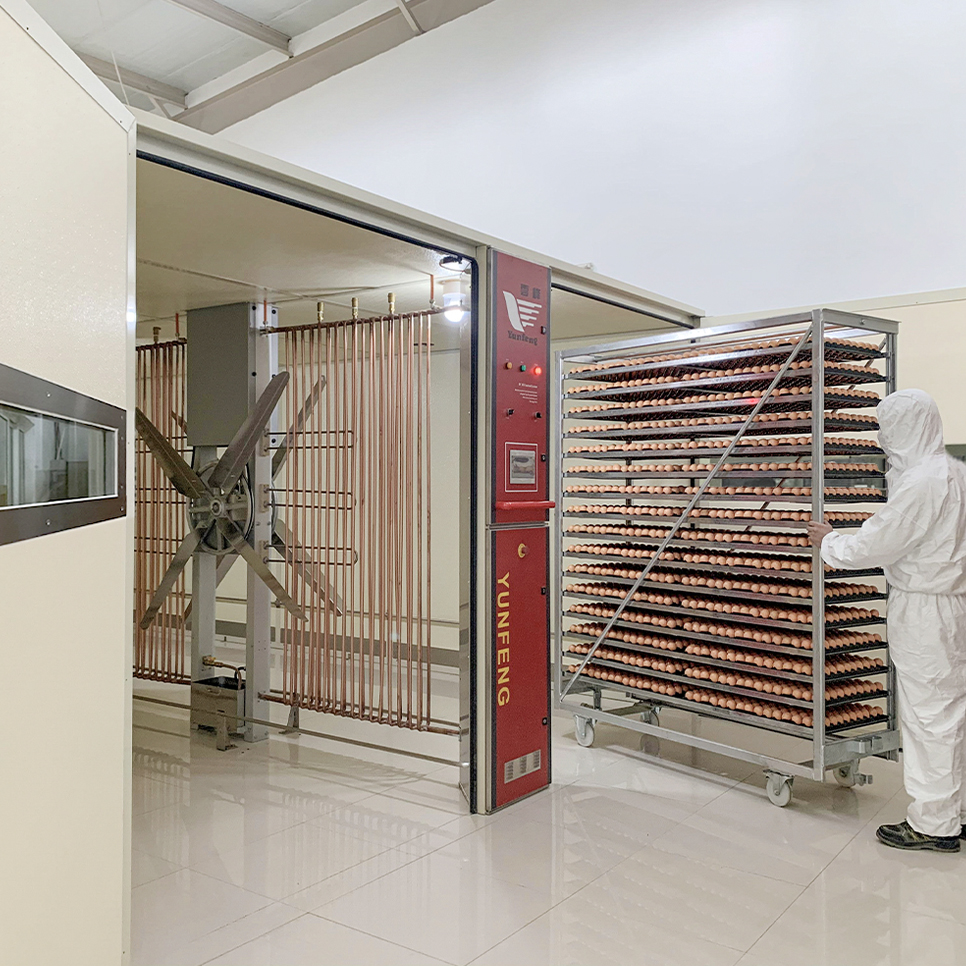
Temperature uniformity becomes increasingly challenging as incubator capacity increases, requiring sophisticated air circulation systems to eliminate hot spots and cold zones. Professional-grade egg incubator units employ forced air circulation with variable-speed fans that create consistent airflow patterns throughout the entire incubation chamber. This circulation system works in conjunction with strategically placed heating elements to maintain temperature variations within acceptable tolerances, typically less than 0.5 degrees Fahrenheit across the entire incubator space.
Humidity Management Systems
Proper humidity control represents another critical factor in achieving consistent hatch rates across large batches of eggs. Industrial egg incubator systems integrate multiple humidity control mechanisms, including water reservoir systems, spray nozzles, and evaporative surfaces that work together to maintain optimal moisture levels. The humidity requirements change throughout the incubation period, starting at approximately 60% relative humidity during the first 18 days and increasing to 70-75% during the hatching phase.
Modern humidity control systems in commercial egg incubator units feature automated monitoring and adjustment capabilities that respond to changes in ambient conditions and egg load characteristics. These systems incorporate hygrometers positioned at multiple locations within the incubation chamber to ensure uniform humidity distribution. Sophisticated control algorithms calculate the precise amount of moisture addition or removal needed to maintain target humidity levels while accounting for factors such as egg age, shell permeability, and external environmental conditions.
Automation and Monitoring Technologies
Digital Control Interface Systems
Contemporary egg incubator systems for large-scale operations feature comprehensive digital control interfaces that provide operators with detailed monitoring capabilities and automated control functions. These interfaces display real-time data on temperature, humidity, air circulation, and turning mechanisms while maintaining historical logs of all operational parameters. The integration of touchscreen displays and intuitive software interfaces allows operators to easily adjust settings, monitor trends, and identify potential issues before they affect hatch rates.
Advanced egg incubator control systems incorporate alarm functions that immediately alert operators to any deviations from optimal conditions. These alarm systems can be configured to send notifications through multiple channels, including audio alerts, visual indicators, text messages, and email notifications. Some systems also feature remote monitoring capabilities that allow facility managers to oversee incubation operations from off-site locations, ensuring continuous supervision of critical incubation parameters even during non-business hours.
Data Logging and Analysis Capabilities
Professional egg incubator systems generate extensive data logs that provide valuable insights into incubation performance and help identify opportunities for optimization. These systems record temperature, humidity, turning frequency, and ventilation parameters at regular intervals throughout the incubation cycle. The accumulated data enables operators to analyze trends, identify correlations between environmental conditions and hatch rates, and make informed decisions about operational adjustments.
Statistical analysis of incubation data helps facilities optimize their egg incubator performance by identifying the specific parameter combinations that produce the highest and most consistent hatch rates. This analytical approach enables continuous improvement in incubation protocols and helps establish standard operating procedures that can be replicated across multiple incubation cycles. The data also provides valuable documentation for quality control purposes and regulatory compliance requirements.
Egg Turning and Position Management
Automated Turning Mechanisms
Consistent egg turning represents a fundamental requirement for successful incubation, as it prevents the developing embryo from adhering to the shell membrane and ensures proper development of organ systems. Large-scale egg incubator systems incorporate automated turning mechanisms that rotate eggs at precise intervals, typically every one to two hours throughout the first 18 days of incubation. These turning systems must be designed to handle thousands of eggs simultaneously while maintaining gentle, consistent movement that mimics natural brooding behavior.
Modern turning mechanisms in commercial egg incubator units utilize servo motor systems with programmable control logic that can be adjusted based on egg size, breed characteristics, and incubation stage requirements. The turning angle is typically set between 45 and 90 degrees to ensure adequate movement without causing stress to developing embryos. Advanced systems incorporate position sensors that verify proper turning completion and alert operators to any mechanical issues that might interrupt the turning cycle.
Tray and Rack Configuration
The physical configuration of egg trays and racks within an egg incubator significantly impacts both capacity utilization and environmental uniformity throughout the incubation chamber. Professional incubator designs feature modular tray systems that can accommodate different egg sizes and allow for efficient loading and unloading procedures. These tray systems are engineered to promote optimal air circulation around each egg while maintaining structural integrity under the weight of large egg loads.
Spacing between trays and racks must be carefully calculated to ensure adequate air circulation while maximizing capacity utilization within the available incubator space. The tray configuration also influences the effectiveness of turning mechanisms, requiring precise alignment with automated turning systems to ensure consistent movement across all egg positions. Quality tray materials resist corrosion and facilitate thorough cleaning and disinfection procedures between incubation cycles.
Ventilation and Air Quality Management
Air Exchange Rate Optimization
Proper ventilation within an egg incubator ensures adequate oxygen supply for developing embryos while removing excess carbon dioxide and maintaining optimal air quality throughout the incubation chamber. Commercial incubation systems require carefully calculated air exchange rates that balance the need for fresh air with the requirement to maintain stable temperature and humidity conditions. The air exchange rate typically increases as embryos develop and their oxygen consumption rises during the later stages of incubation.
Advanced ventilation systems in large-scale egg incubator units incorporate variable air exchange capabilities that automatically adjust fresh air intake based on embryo development stage and detected air quality parameters. These systems utilize carbon dioxide sensors and oxygen monitors to maintain optimal atmospheric conditions while minimizing energy consumption associated with conditioning incoming fresh air. Proper ventilation design also helps prevent the accumulation of harmful gases and maintains uniform air quality throughout the entire incubation space.
Air Filtration and Contamination Control
Air filtration systems play a crucial role in maintaining sanitary conditions within large-scale egg incubator environments by removing airborne contaminants, dust particles, and potential pathogens from incoming air supplies. High-efficiency particulate air filters are typically employed to achieve the level of air purity required for successful commercial incubation operations. These filtration systems must be regularly maintained and replaced according to manufacturer specifications to ensure continued effectiveness.
Some advanced egg incubator systems incorporate ultraviolet sterilization or other air treatment technologies to further reduce the risk of contamination during the incubation process. These additional air treatment measures become particularly important in facilities that process eggs from multiple sources or operate in environments with elevated contamination risks. Proper air filtration and treatment help maintain the sterile conditions necessary for achieving consistent hatch rates across large-scale operations.
Capacity Planning and Operational Efficiency
Scaling Considerations for Large Operations
Large-scale poultry operations must carefully consider capacity requirements when selecting egg incubator systems to ensure optimal utilization of facility space and resources. The relationship between incubator capacity and operational efficiency involves balancing factors such as batch size consistency, labor requirements, and equipment utilization rates. Larger capacity units may offer economies of scale but can also present challenges in maintaining environmental uniformity and managing operational complexity.
Modular egg incubator designs provide flexibility for operations that need to adjust capacity based on seasonal demand variations or production expansion plans. These modular systems allow facilities to add or remove incubation capacity incrementally without major infrastructure changes. The modular approach also provides operational redundancy, allowing continued production even if individual incubator units require maintenance or experience technical issues.
Energy Efficiency and Operational Costs
Energy consumption represents a significant operational cost for large-scale incubation facilities, making energy efficiency a critical consideration in egg incubator selection and operation. Modern incubation systems incorporate energy-efficient heating elements, variable-speed motors, and advanced insulation materials to minimize power consumption while maintaining optimal incubation conditions. Heat recovery systems can capture waste heat from exhaust air and use it to preheat incoming fresh air, further reducing energy requirements.
Operational efficiency extends beyond energy consumption to include factors such as labor requirements, maintenance costs, and equipment longevity. Well-designed egg incubator systems minimize manual intervention requirements through comprehensive automation while providing easy access for routine maintenance and cleaning procedures. The total cost of ownership for incubation equipment should include not only initial purchase price but also ongoing operational costs, maintenance requirements, and expected service life.
FAQ
What temperature accuracy is required for consistent hatch rates in commercial egg incubator operations
Commercial egg incubator systems should maintain temperature accuracy within plus or minus 0.2 degrees Fahrenheit of the target temperature to achieve optimal hatch rate consistency. Temperature variations beyond this range can significantly impact embryo development and result in reduced hatch rates or developmental abnormalities. Most professional-grade incubators incorporate multiple temperature sensors and advanced control algorithms to achieve this level of precision across large incubation chambers.
How often should eggs be turned during the incubation process in large-scale operations
Eggs should be turned every one to two hours during the first 18 days of incubation in commercial egg incubator systems. This frequent turning prevents the developing embryo from adhering to the shell membrane and ensures proper organ development. Automated turning systems in professional incubators are typically programmed to perform turning operations at precise intervals, with most systems defaulting to hourly turning cycles to maximize hatch success rates.
What humidity levels provide the best results for different stages of incubation
Optimal humidity levels in an egg incubator vary throughout the incubation cycle, starting at approximately 58-60% relative humidity during the first 18 days of development. During the final hatching phase, humidity should be increased to 65-70% to facilitate the hatching process and prevent chick dehydration. Maintaining these specific humidity ranges requires precise monitoring and control systems that can automatically adjust moisture levels based on incubation stage and environmental conditions.
How does air circulation affect hatch rate uniformity in large commercial incubators
Proper air circulation in commercial egg incubator systems is essential for maintaining temperature and humidity uniformity throughout the incubation chamber. Inadequate air circulation can create hot spots, cold zones, and areas with improper humidity levels that negatively impact embryo development. Professional incubation systems typically utilize forced air circulation with variable-speed fans to ensure consistent environmental conditions across all egg positions, resulting in more uniform hatch rates and reduced variation in chick quality.
Commercial poultry operations depend heavily on consistent hatching results to maintain profitability and meet production targets. The role of an egg incubator in achieving uniform hatch rates across large-scale operations cannot be overstated, as even minor variations in environmental conditions can significantly impact the viability of developing embryos. Modern industrial facilities require sophisticated incubation systems that deliver precise temperature control, optimal humidity levels, and proper ventilation throughout the entire incubation cycle. Understanding how these critical factors interact within an egg incubator system helps operators maximize their hatching success while minimizing operational costs and resource waste.
Environmental Control Systems in Industrial Incubation
Temperature Regulation Technology
The foundation of successful large-scale incubation lies in maintaining precise temperature control throughout the development process. An egg incubator designed for commercial applications typically incorporates multiple temperature sensors positioned strategically throughout the chamber to ensure uniform heat distribution. These sensors continuously monitor conditions and provide feedback to automated control systems that make real-time adjustments to heating elements. Advanced incubation systems utilize proportional control algorithms that prevent temperature fluctuations by gradually adjusting heating output rather than operating in simple on-off cycles.
Temperature uniformity becomes increasingly challenging as incubator capacity increases, requiring sophisticated air circulation systems to eliminate hot spots and cold zones. Professional-grade egg incubator units employ forced air circulation with variable-speed fans that create consistent airflow patterns throughout the entire incubation chamber. This circulation system works in conjunction with strategically placed heating elements to maintain temperature variations within acceptable tolerances, typically less than 0.5 degrees Fahrenheit across the entire incubator space.
Humidity Management Systems
Proper humidity control represents another critical factor in achieving consistent hatch rates across large batches of eggs. Industrial egg incubator systems integrate multiple humidity control mechanisms, including water reservoir systems, spray nozzles, and evaporative surfaces that work together to maintain optimal moisture levels. The humidity requirements change throughout the incubation period, starting at approximately 60% relative humidity during the first 18 days and increasing to 70-75% during the hatching phase.
Modern humidity control systems in commercial egg incubator units feature automated monitoring and adjustment capabilities that respond to changes in ambient conditions and egg load characteristics. These systems incorporate hygrometers positioned at multiple locations within the incubation chamber to ensure uniform humidity distribution. Sophisticated control algorithms calculate the precise amount of moisture addition or removal needed to maintain target humidity levels while accounting for factors such as egg age, shell permeability, and external environmental conditions.
Automation and Monitoring Technologies
Digital Control Interface Systems
Contemporary egg incubator systems for large-scale operations feature comprehensive digital control interfaces that provide operators with detailed monitoring capabilities and automated control functions. These interfaces display real-time data on temperature, humidity, air circulation, and turning mechanisms while maintaining historical logs of all operational parameters. The integration of touchscreen displays and intuitive software interfaces allows operators to easily adjust settings, monitor trends, and identify potential issues before they affect hatch rates.
Advanced egg incubator control systems incorporate alarm functions that immediately alert operators to any deviations from optimal conditions. These alarm systems can be configured to send notifications through multiple channels, including audio alerts, visual indicators, text messages, and email notifications. Some systems also feature remote monitoring capabilities that allow facility managers to oversee incubation operations from off-site locations, ensuring continuous supervision of critical incubation parameters even during non-business hours.
Data Logging and Analysis Capabilities
Professional egg incubator systems generate extensive data logs that provide valuable insights into incubation performance and help identify opportunities for optimization. These systems record temperature, humidity, turning frequency, and ventilation parameters at regular intervals throughout the incubation cycle. The accumulated data enables operators to analyze trends, identify correlations between environmental conditions and hatch rates, and make informed decisions about operational adjustments.
Statistical analysis of incubation data helps facilities optimize their egg incubator performance by identifying the specific parameter combinations that produce the highest and most consistent hatch rates. This analytical approach enables continuous improvement in incubation protocols and helps establish standard operating procedures that can be replicated across multiple incubation cycles. The data also provides valuable documentation for quality control purposes and regulatory compliance requirements.
Egg Turning and Position Management
Automated Turning Mechanisms
Consistent egg turning represents a fundamental requirement for successful incubation, as it prevents the developing embryo from adhering to the shell membrane and ensures proper development of organ systems. Large-scale egg incubator systems incorporate automated turning mechanisms that rotate eggs at precise intervals, typically every one to two hours throughout the first 18 days of incubation. These turning systems must be designed to handle thousands of eggs simultaneously while maintaining gentle, consistent movement that mimics natural brooding behavior.
Modern turning mechanisms in commercial egg incubator units utilize servo motor systems with programmable control logic that can be adjusted based on egg size, breed characteristics, and incubation stage requirements. The turning angle is typically set between 45 and 90 degrees to ensure adequate movement without causing stress to developing embryos. Advanced systems incorporate position sensors that verify proper turning completion and alert operators to any mechanical issues that might interrupt the turning cycle.
Tray and Rack Configuration
The physical configuration of egg trays and racks within an egg incubator significantly impacts both capacity utilization and environmental uniformity throughout the incubation chamber. Professional incubator designs feature modular tray systems that can accommodate different egg sizes and allow for efficient loading and unloading procedures. These tray systems are engineered to promote optimal air circulation around each egg while maintaining structural integrity under the weight of large egg loads.
Spacing between trays and racks must be carefully calculated to ensure adequate air circulation while maximizing capacity utilization within the available incubator space. The tray configuration also influences the effectiveness of turning mechanisms, requiring precise alignment with automated turning systems to ensure consistent movement across all egg positions. Quality tray materials resist corrosion and facilitate thorough cleaning and disinfection procedures between incubation cycles.
Ventilation and Air Quality Management
Air Exchange Rate Optimization
Proper ventilation within an egg incubator ensures adequate oxygen supply for developing embryos while removing excess carbon dioxide and maintaining optimal air quality throughout the incubation chamber. Commercial incubation systems require carefully calculated air exchange rates that balance the need for fresh air with the requirement to maintain stable temperature and humidity conditions. The air exchange rate typically increases as embryos develop and their oxygen consumption rises during the later stages of incubation.
Advanced ventilation systems in large-scale egg incubator units incorporate variable air exchange capabilities that automatically adjust fresh air intake based on embryo development stage and detected air quality parameters. These systems utilize carbon dioxide sensors and oxygen monitors to maintain optimal atmospheric conditions while minimizing energy consumption associated with conditioning incoming fresh air. Proper ventilation design also helps prevent the accumulation of harmful gases and maintains uniform air quality throughout the entire incubation space.
Air Filtration and Contamination Control
Air filtration systems play a crucial role in maintaining sanitary conditions within large-scale egg incubator environments by removing airborne contaminants, dust particles, and potential pathogens from incoming air supplies. High-efficiency particulate air filters are typically employed to achieve the level of air purity required for successful commercial incubation operations. These filtration systems must be regularly maintained and replaced according to manufacturer specifications to ensure continued effectiveness.
Some advanced egg incubator systems incorporate ultraviolet sterilization or other air treatment technologies to further reduce the risk of contamination during the incubation process. These additional air treatment measures become particularly important in facilities that process eggs from multiple sources or operate in environments with elevated contamination risks. Proper air filtration and treatment help maintain the sterile conditions necessary for achieving consistent hatch rates across large-scale operations.
Capacity Planning and Operational Efficiency
Scaling Considerations for Large Operations
Large-scale poultry operations must carefully consider capacity requirements when selecting egg incubator systems to ensure optimal utilization of facility space and resources. The relationship between incubator capacity and operational efficiency involves balancing factors such as batch size consistency, labor requirements, and equipment utilization rates. Larger capacity units may offer economies of scale but can also present challenges in maintaining environmental uniformity and managing operational complexity.
Modular egg incubator designs provide flexibility for operations that need to adjust capacity based on seasonal demand variations or production expansion plans. These modular systems allow facilities to add or remove incubation capacity incrementally without major infrastructure changes. The modular approach also provides operational redundancy, allowing continued production even if individual incubator units require maintenance or experience technical issues.
Energy Efficiency and Operational Costs
Energy consumption represents a significant operational cost for large-scale incubation facilities, making energy efficiency a critical consideration in egg incubator selection and operation. Modern incubation systems incorporate energy-efficient heating elements, variable-speed motors, and advanced insulation materials to minimize power consumption while maintaining optimal incubation conditions. Heat recovery systems can capture waste heat from exhaust air and use it to preheat incoming fresh air, further reducing energy requirements.
Operational efficiency extends beyond energy consumption to include factors such as labor requirements, maintenance costs, and equipment longevity. Well-designed egg incubator systems minimize manual intervention requirements through comprehensive automation while providing easy access for routine maintenance and cleaning procedures. The total cost of ownership for incubation equipment should include not only initial purchase price but also ongoing operational costs, maintenance requirements, and expected service life.
FAQ
What temperature accuracy is required for consistent hatch rates in commercial egg incubator operations
Commercial egg incubator systems should maintain temperature accuracy within plus or minus 0.2 degrees Fahrenheit of the target temperature to achieve optimal hatch rate consistency. Temperature variations beyond this range can significantly impact embryo development and result in reduced hatch rates or developmental abnormalities. Most professional-grade incubators incorporate multiple temperature sensors and advanced control algorithms to achieve this level of precision across large incubation chambers.
How often should eggs be turned during the incubation process in large-scale operations
Eggs should be turned every one to two hours during the first 18 days of incubation in commercial egg incubator systems. This frequent turning prevents the developing embryo from adhering to the shell membrane and ensures proper organ development. Automated turning systems in professional incubators are typically programmed to perform turning operations at precise intervals, with most systems defaulting to hourly turning cycles to maximize hatch success rates.
What humidity levels provide the best results for different stages of incubation
Optimal humidity levels in an egg incubator vary throughout the incubation cycle, starting at approximately 58-60% relative humidity during the first 18 days of development. During the final hatching phase, humidity should be increased to 65-70% to facilitate the hatching process and prevent chick dehydration. Maintaining these specific humidity ranges requires precise monitoring and control systems that can automatically adjust moisture levels based on incubation stage and environmental conditions.
How does air circulation affect hatch rate uniformity in large commercial incubators
Proper air circulation in commercial egg incubator systems is essential for maintaining temperature and humidity uniformity throughout the incubation chamber. Inadequate air circulation can create hot spots, cold zones, and areas with improper humidity levels that negatively impact embryo development. Professional incubation systems typically utilize forced air circulation with variable-speed fans to ensure consistent environmental conditions across all egg positions, resulting in more uniform hatch rates and reduced variation in chick quality.