Selecting the appropriate hatchery equipment requires careful evaluation of your specific operational requirements, production goals, and technical capabilities. The decision-making process involves analyzing multiple factors including egg capacity, species compatibility, environmental control features, and long-term scalability to ensure your investment delivers optimal hatching performance and operational efficiency.
Modern hatchery operations demand sophisticated equipment solutions that balance automation capabilities with manual oversight requirements. Understanding how different hatchery equipment configurations align with your production objectives and operational constraints becomes essential for making informed purchasing decisions that support sustainable business growth and consistent hatching success rates.
Determining the appropriate capacity for your hatchery equipment begins with analyzing your current and projected egg volumes. Commercial operations typically require hatchery equipment capable of handling thousands of eggs simultaneously, while smaller facilities may focus on specialized or seasonal production cycles. Calculate your peak capacity requirements by considering seasonal variations, species-specific incubation periods, and desired turnover rates.
Your production planning should account for growth projections over the next three to five years, as hatchery equipment represents a significant capital investment. Undersized equipment limits expansion opportunities, while oversized systems may result in inefficient energy consumption and higher operational costs. Consider modular hatchery equipment solutions that allow capacity increases without complete system replacement.
Evaluate the relationship between batch sizes and your market demands. Some operations benefit from continuous production cycles using multiple smaller incubators, while others require large-capacity hatchery equipment for synchronized hatching schedules. Your chosen approach directly influences the type and configuration of equipment needed for optimal operational efficiency.
Different poultry species require distinct environmental conditions and handling protocols, making species compatibility a critical factor in hatchery equipment selection. Chicken eggs typically require different temperature and humidity profiles compared to duck, turkey, or game bird eggs. Your hatchery equipment must accommodate the specific incubation parameters for your target species while maintaining precise environmental control throughout the incubation period.
Consider the physical characteristics of eggs from different species, as these impact turning mechanisms and tray configurations within your hatchery equipment. Turkey eggs require larger spacing and different handling protocols compared to quail eggs. Multi-species operations need hatchery equipment with flexible configuration options or separate dedicated systems for optimal results.
Specialized breeds or rare species may require custom environmental profiles and enhanced monitoring capabilities. Your hatchery equipment selection should include programmable controllers capable of storing and executing multiple incubation protocols, ensuring consistent results across diverse production requirements.
Precise environmental control represents the foundation of successful hatchery operations, making advanced climate control features essential evaluation criteria for hatchery equipment. Modern systems incorporate digital controllers with multiple sensors providing real-time monitoring and automatic adjustments to maintain optimal conditions. Look for hatchery equipment featuring redundant temperature sensors and backup heating elements to prevent catastrophic losses during equipment failures.
Humidity control capabilities vary significantly across hatchery equipment models, with some systems offering basic manual adjustments while others provide automated humidity management based on incubation stage and species requirements. Advanced humidity control systems include water level monitoring, automatic refilling capabilities, and precise vapor distribution to ensure uniform moisture levels throughout the incubation chamber.
Consider the responsiveness and stability of environmental control systems when evaluating different hatchery equipment options. Systems with slow response times or significant temperature fluctuations can negatively impact hatch rates and chick quality. Request performance data and stability specifications to compare different manufacturers' control system capabilities.
Modern hatchery equipment incorporates sophisticated automation features that reduce labor requirements while improving consistency and monitoring capabilities. Automated turning systems ensure proper embryo development by eliminating manual handling risks and maintaining precise turning schedules throughout the incubation period. Evaluate turning mechanisms for reliability, adjustability, and compatibility with different egg sizes and tray configurations.
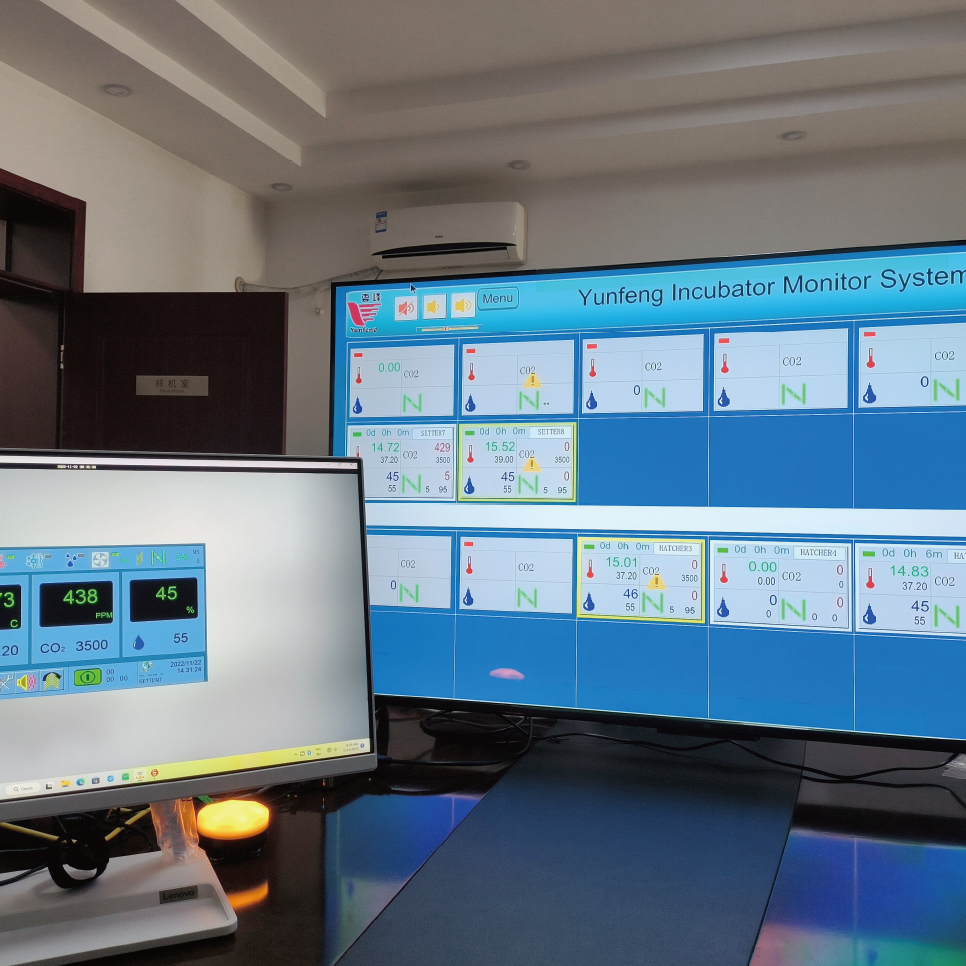
Data logging and remote monitoring capabilities enable comprehensive tracking of environmental conditions, equipment performance, and production outcomes. Advanced hatchery equipment systems provide detailed records of temperature, humidity, turning cycles, and alarm events, supporting quality control initiatives and troubleshooting efforts. Consider systems offering smartphone or computer-based monitoring for enhanced operational flexibility.
Alarm systems and backup protocols protect valuable egg inventory during equipment malfunctions or power failures. Comprehensive alarm packages include audio and visual notifications, remote alert capabilities, and automatic backup system activation. Your hatchery equipment should include battery backup power for critical control systems and emergency ventilation capabilities.
Long-term operational expenses significantly impact the total cost of ownership for hatchery equipment, making energy efficiency analysis crucial during the selection process. Modern incubators incorporate improved insulation, efficient heating elements, and optimized airflow designs that reduce energy consumption compared to older equipment models. Compare energy consumption specifications and calculate projected utility costs based on your local energy rates and operational schedules.
Consider the relationship between hatchery equipment capacity and energy efficiency, as oversized systems often consume disproportionate amounts of energy when operating below optimal capacity. Variable-speed fans, proportional heating controls, and intelligent power management features contribute to reduced operating costs while maintaining precise environmental conditions.
Evaluate maintenance requirements and associated costs when comparing different hatchery equipment options. Systems requiring frequent calibration, component replacement, or specialized service support may offset initial purchase savings through higher long-term operational expenses. Request detailed maintenance schedules and parts availability information from potential suppliers.
Reliable technical support and parts availability become critical factors for maintaining consistent hatchery equipment performance and minimizing production disruptions. Evaluate manufacturer support capabilities including response times, service technician availability, and parts inventory management. Local or regional service support reduces response times and travel costs compared to distant manufacturer locations.
Consider the complexity of routine maintenance procedures and whether your staff can perform basic service tasks independently. Hatchery equipment designs that facilitate easy cleaning, component access, and routine adjustments reduce dependence on external service providers while supporting better equipment longevity and performance consistency.
Training and documentation quality significantly impact successful hatchery equipment implementation and long-term operational success. Comprehensive training programs, detailed operation manuals, and ongoing technical support resources ensure your team can maximize equipment capabilities and troubleshoot common issues effectively.
Developing a comprehensive budget for hatchery equipment procurement requires consideration of initial purchase costs, installation expenses, training requirements, and ongoing operational expenses. Beyond the base equipment price, factor in electrical upgrades, ventilation modifications, backup power systems, and facility preparation costs that may be necessary for proper installation and operation.
Financing options can make advanced hatchery equipment more accessible while preserving working capital for other operational needs. Equipment leasing programs, manufacturer financing, and agricultural lending programs offer different advantages depending on your financial situation and tax considerations. Compare total costs across different financing scenarios to identify the most advantageous approach for your operation.
Consider the return on investment potential of different hatchery equipment configurations based on improved hatch rates, reduced labor costs, and increased production capacity. Higher-quality equipment may justify premium pricing through superior performance, lower maintenance costs, and longer operational life compared to budget alternatives.
Warranty coverage and manufacturer guarantees provide important protection for your hatchery equipment investment while indicating manufacturer confidence in product quality and reliability. Compare warranty terms including coverage duration, included components, service response requirements, and parts replacement policies. Extended warranty options may offer additional value for critical production equipment.
Evaluate the track record and financial stability of hatchery equipment manufacturers to ensure long-term parts availability and support services. Established companies with proven industry presence provide greater assurance of continued support compared to newer or financially unstable manufacturers.
Consider equipment upgrade paths and compatibility with future technology improvements. Modular hatchery equipment designs and standardized interfaces enable component upgrades without complete system replacement, protecting your investment value over time. Systems with proprietary interfaces or discontinued product lines may become difficult to upgrade or maintain.
Start with hatchery equipment sized for 120-150% of your current peak demand to accommodate growth and seasonal variations. This approach prevents immediate capacity constraints while avoiding excessive oversizing that reduces efficiency. Consider modular systems that enable future expansion without replacing your initial investment.
Automation features significantly improve consistency, reduce labor costs, and minimize human error risks in hatchery operations. Essential automation includes automatic turning, temperature control, and humidity management. Advanced features like data logging and remote monitoring provide additional value for larger operations or those requiring detailed production records.
Energy efficiency becomes increasingly important for long-term operational profitability, especially with rising utility costs. Calculate the projected energy savings over five years to determine whether premium-priced efficient hatchery equipment justifies higher initial investment. Well-insulated systems with intelligent controls typically offer the best energy performance.
Modern hatchery equipment typically requires daily cleaning, weekly calibration checks, and monthly component inspections. Annual professional servicing ensures optimal performance and warranty compliance. Choose systems with accessible components and clear maintenance procedures to minimize service costs and downtime risks.

Beijing Yunfeng Limin Livestock Equipment Co., Ltd.
Copyright © 2026 Beijing Yunfeng Limin Livestock Equipment Co., Ltd. - | Privacy policy
 EN
EN