1 — Operating Procedures
(1)Select no fewer than 15 qualified chicks from each flock.
(2) Humanely euthanize the chicks in accordance with locally approved methods and the company’s specified protocols.
(3)Weigh each euthanized chick individually and record the weights.
(4)Use standard necropsy procedures to carefully remove the entire yolk sac from the body cavity.
(5)Place the euthanized chick on its back with its feet facing toward you.
(6)Fold both wings backward.
(7)Make an incision in the skin between the legs and chest to fully abduct both legs and lay them flat on the table.
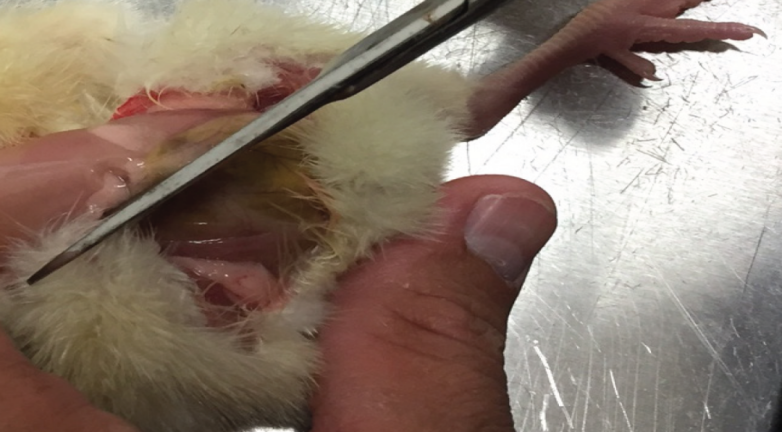
(8)Make a transverse incision along the posterior margin of the keel bone, remove the skin on the ventral side of the chick, and pull the skin toward the head and tail respectively. The muscular body wall will then be visible.
(9)Use scissors to cut open the body cavity behind the sternum, then pull the abdominal muscles toward the tail to expose part of the abdominal viscera.
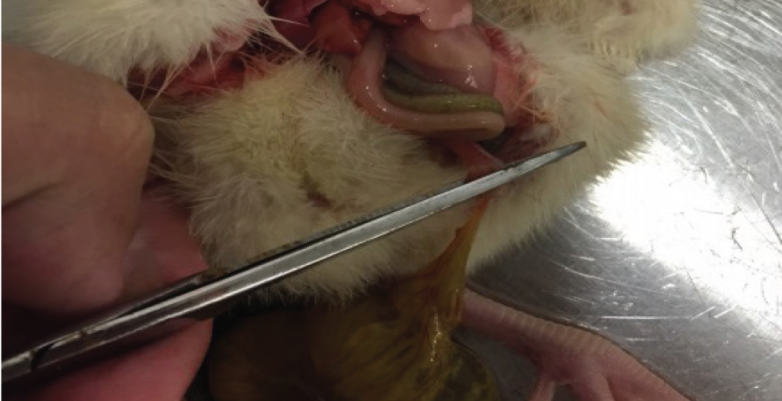
(10)Sever the vitelline stalk and remove the yolk sac. The vitelline stalk is a narrow tubular tissue connecting the yolk sac membrane to the junction of the jejunum and ileum.
(11)Weigh each yolk sac individually.
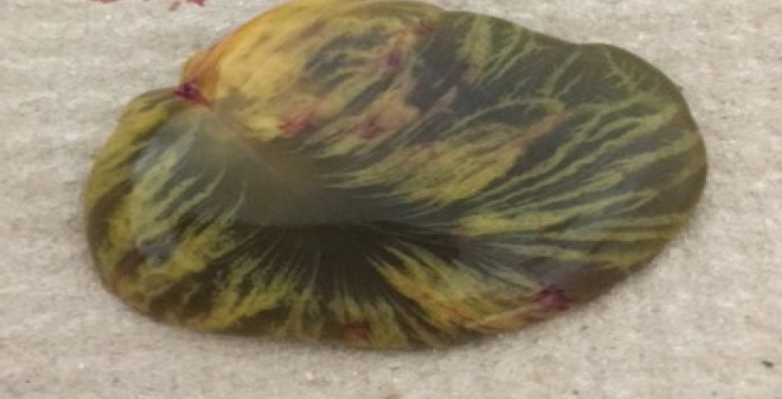
(12)Calculate the ratio of yolk sac weight to chick body weight by dividing the yolk sac weight by the chick’s body weight.
(13)Multiply the ratio by 100 to obtain the percentage.
(14)Note: The acceptable percentage of yolk sac weight relative to body weight is 10% or less.
2 — Examples of yolk sac
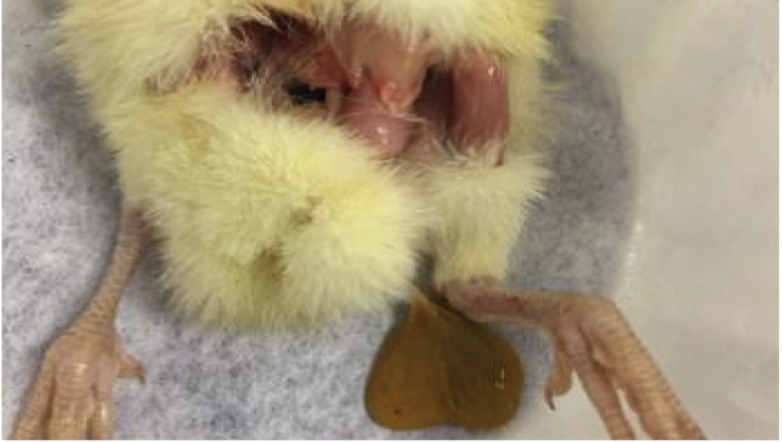
The acceptable yolk sac
As shown below.
The chicks in this
case were hatched at a relatively low temperature, with the eggshell temperature below 100°F (37.8°C).
After hatching, the body temperature of the chicks measured in the hatcher was 103°F (39.4°C). The yolk sac to body weight percentage was 8%.
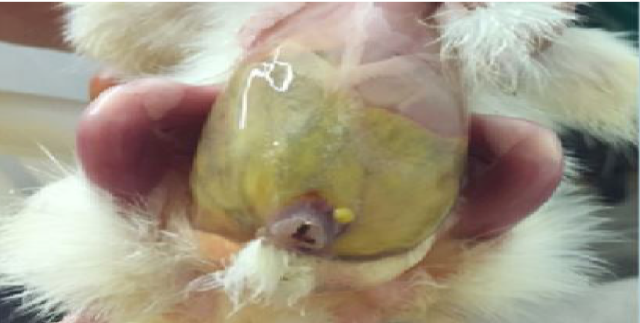
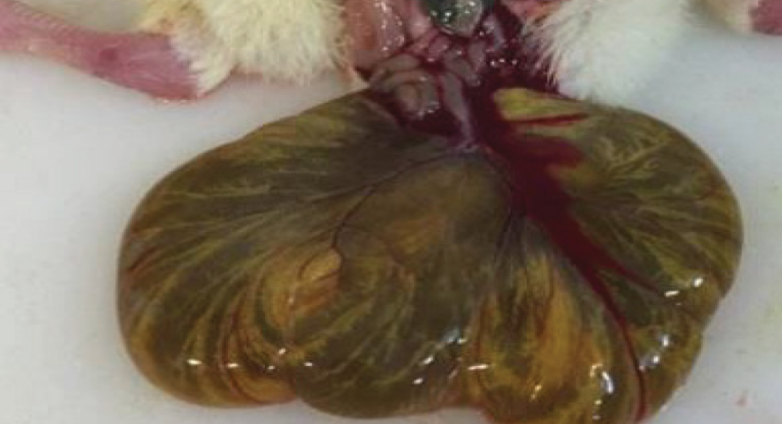
The unacceptable yolk sac
As shown below.
The hatching eggs for these chicks were exposed to temperatures above 101°F (38.3°C) starting from the second week of incubation. The body temperature of the chicks at pull time reached 106°F (41.1°C), and the yolk sac to body weight percentage was 22%.
3 — Key Explanations
Monitor eggshell temperature frequently. Target: Eggshell temperature below 100°F (37.8°C).
Monitor the hatch window 32 hours prior to chick pull. Target: The proportion of chicks hatched at this time shall not exceed 1–2% at maximum.
Monitor chick body temperature after hatching. Target: Body temperature between 103–104°F (39.4–40.0°C).
Observe the activity of chicks after placement. Target: Chicks are alert and active, and take the initiative to seek feed and drinking water.
Source: Wechat Official Account Poultry Times, released on June 5, 2026. Studied from Mark Cornelissen, Hendrix Genetics.


 EN
EN